

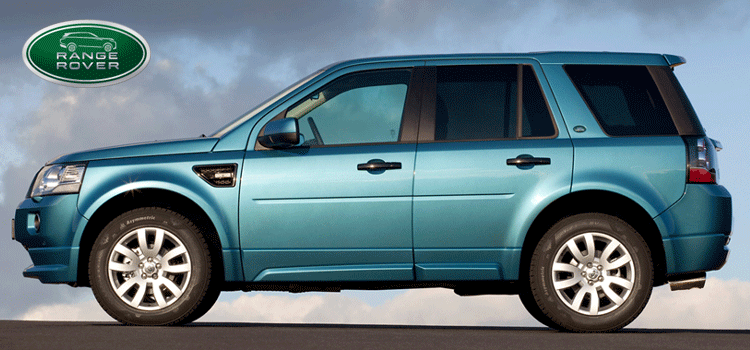
Introduction:
The Land Rover Freelander 2 TD4 engine remains a reliable and strong power unit in the world of compact SUVs. Even if you own the diesel TD4 version or the petrol-powered variant, meticulous maintenance is the keystone of long-term performance and efficiency. Explore all the main steps to maintaining your Freelander 2 TD4, from oil changes and coolant flushes to timing belt replacements and EGR valve cleaning. Understanding these components not only reduces the risk of breakdowns but can remarkably lower your Freelander 2 TD4 maintenance cost over time.
Understanding the Land Rover Freelander 2 TD4 Engine
The Land Rover Freelander 2 TD4 engine is a turbocharged 2.2-litre diesel engine that offers robust torque and fuel efficiency. Its petrol counterparts, although less common, are still powerful and demand equally meticulous care. Both variants are designed for performance under tough conditions, but regular service is essential to keep them running at peak output. Diesel versions often suffer from carbon buildup in the intake system, while petrol engines are more prone to ignition-related problems. Regardless of version, these engines are intricate and benefit from attentive, knowledgeable servicing.
Freelander 2 TD4 Oil Change: Why It Matters
One of the simplest but most vital tasks is the Freelander 2 TD4 oil change. Using the best oil for Freelander 2 TD4, normally a fully synthetic 5W-30 grade that meets ACEA C2 or C3 specification, guarantees optimal engine lubrication. Oil degrades with time, resulting in poor lubrication, increased friction, and eventually, engine wear. Land Rover suggests oil changes every 12,000 to 15,000 miles, but for diesel TD4 engines that go through heavy use or urban driving, changing the oil every 8,000 miles is perfect. Routine oil changes help maintain turbocharger efficiency and prevent common Freelander 2 engine issues such as turbo failure and injector clogging.
Timing Belt Replacement: A Preventive Necessity
Many Freelander 2 owners overlook the necessity of timely Freelander 2 timing belt replacement. The timing belt, or cambelt, adjusts engine valves and pistons. If it fails, severe engine damage is inevitable. For the Freelander 2 TD4 engine, the timing belt is generally recommended for replacement every 150,000 miles or 10 years, whichever comes first. Ignoring this maintenance step can lead to bent valves, cracked pistons, or even a complete engine rebuild. If your Freelander 2 has reached the 10-year mark, it’s time to schedule that timing belt replacement without delay.
Spotting Freelander 2 Engine Problems Early
While the Freelander 2 is typically a dependable vehicle, Freelander 2 engine problems can arise, specifically in neglected engines. Early indications include poor fuel economy, engine misfires, smoke from the exhaust, knocking noises, and sluggish acceleration. A blocked EGR valve, defective injectors, or failing turbo components can trigger these symptoms. Routine diagnostic checks and proactive maintenance will prevent these issues from turning into expensive repairs. By listening to your engine and handling early signs, you impressively reduce the risk of encountering Freelander 2 common engine issues.
Coolant Flush: Keeping Temperatures in Check
Performing a Freelander 2 coolant flush is vital to prevent overheating, particularly during summer or long-distance driving. Coolant doesn’t just balance engine temperature; it also prevents corrosion inside the radiator and engine block. Over time, old coolant can turn acidic and damage internal units.
It’s suggested to flush the coolant system every 5 years or 60,000 miles. Confirm to refill it with the correct OAT (Organic Acid Technology) coolant to maintain corrosion resistance and heat transfer properties. Don’t overlook this important step in Land Rover Freelander 2 diesel engine care.
EGR Valve Cleaning: Crucial for Diesel Performance
One of the more overlooked facets of Freelander 2 TD4 maintenance is Freelander 2 EGR valve cleaning. The Exhaust Gas Recirculation (EGR) valve recycles part of the exhaust gases to decrease emissions. However, in diesel engines, it often becomes blocked with soot and carbon deposits. A dirty EGR valve can result in reduced power, engine knocking, and increased fuel consumption. Routine cleaning, specifically for diesel variants, is suggested every 40,000 to 60,000 miles. In some cases, EGR valve replacement may be more effective, particularly in older engines.
Land Rover Freelander 2 Service Schedule: Following the Blueprint
Sticking to the official Land Rover Freelander 2 service schedule is the most efficient way to prevent major repairs. This schedule outlines the exemplary maintenance intervals for oil changes, air filter replacement, fuel filter inspections, timing belt checks, and coolant services. Diesel variants typically need more frequent filter replacements due to soot and carbon buildup. Petrol engines, meanwhile, may require spark plug inspections at shorter intervals. The manufacturer’s service blueprint serves as your roadmap for long engine life and reliability.
Freelander 2 TD4 Maintenance:
Understanding your Freelander 2 TD4 maintenance cost enables you to plan. Annual servicing costs can be different based on location and the specific parts or repairs required. Major services, such as a timing belt replacement or EGR valve servicing, can increase the cost, but these are long-term investments in vehicle reliability. Diesel versions tend to have higher service costs due to components such as DPF filters and turbochargers. However, these costs can be managed with meticulous maintenance and by using OEM (Original Equipment Manufacturer) parts when possible.
Keeping the Freelander 2 Petrol Variant Healthy
While much attention is given to diesel variants, Freelander 2 petrol engines require equal care. Petrol models are normally smoother and quieter but may suffer from coil pack failures and carbon buildup in intake valves, particularly in direct injection models. Regular oil changes, spark plug inspections, and fuel system cleanings are necessary. Using good-quality fuel and adhering to the Land Rover Freelander 2 service schedule guarantees your petrol engine remains as dependable as its diesel cousin.
Final Thoughts
Even if you drive a diesel TD4 or a petrol variant, understanding and respecting the maintenance demands of your Land Rover Freelander 2 TD4 engine is critical. From timely Freelander 2 oil changes and coolant flushes to timing belt replacement and EGR cleaning, each step plays a major role in overall engine health. Neglect results in breakdowns, increased emissions, and notably higher repair costs. But with a proactive mindset and a routine, you can prolong the lifespan of your Freelander 2 engine far beyond expectations. When it comes to detailed diagnostics or main engine work, depend on experts who truly understand Land Rovers. Range Rover Engine Specialists offer customized solutions to keep your Freelander 2 performing at its best.
FAQs:
How often should I change the oil in my Freelander 2 TD4?
Change the oil every 8,000 miles for urban or heavy use, though Land Rover suggests every 12,000–15,000 miles. Always use fully synthetic 5W-30 oil that meets ACEA C2 or C3 specs.
When should the timing belt be replaced on the Freelander 2 TD4?
Replace the timing belt every 150,000 miles or 10 years, whichever comes first. Failure to do so can lead to severe engine damage.
What are the signs of engine problems in a Freelander 2?
Watch for smoke, strange noises, poor fuel economy, or sluggish acceleration. These may indicate issues such as turbo failure, EGR blockage, or injector defects.
Why is EGR valve cleaning important for the TD4 diesel?
Diesel EGR valves block with soot, reducing performance and increasing fuel use. Clean every 40,000–60,000 miles or replace if heavily blocked.
Does the Freelander 2 petrol variant need different maintenance?
Yes, petrol models require regular spark plug checks and may experience coil pack issues. Use quality fuel and follow the standard service schedule for best results.