

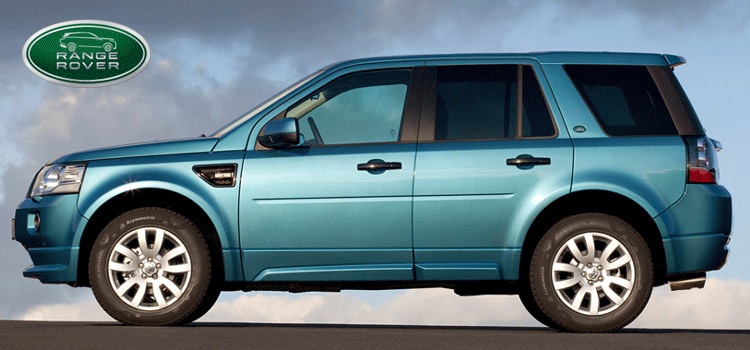
Introduction:
The Land Rover Freelander has long been admired for merging everyday usability with rugged engineering, but the 3.0 TDV6 variant carries a reputation that every owner eventually hears about. Understanding why this engine can fail, and how those failures are fixed, is vital for protecting both performance and investment. Land Rover Freelander 3.0 tdv6 engine failure generally occurs due to internal mechanical stress and lubrication-related issues, but the good news is that most failures are preventable or repairable when diagnosed early.
Understanding the Freelander 3.0 TDV6 Engine
The Freelander 3.0 TDV6 is a diesel V6 designed to deliver seamless torque and refined driving for an SUV of its class. Unlike smaller four-cylinder diesels, this engine works under higher internal loads, particularly within the crankshaft, bearings, and oil system. Land Rover also offered petrol versions in the Freelander range, which differ significantly in construction and failure patterns, making it essential to distinguish between the two. While petrol engines depend more on ignition and fuel delivery systems, the diesel TDV6 relies only on precise lubrication and strong bottom-end components. This fundamental difference explains why diesel failures are often more severe when they occur.
What Causes 3.0 TDV6 Engine Failure?
Many owners ask what truly leads to a 3.0 TDV6 engine failure, especially when the vehicle has been serviced routinely. The most common cause is crankshaft bearing wear. Over time, oil contamination or reduced oil pressure accelerates wear on the main and big-end bearings. Once these bearings degrade, the crankshaft can fracture without much warning.
Another contributing factor is prolonged oil service intervals. Diesel engines generate more soot and contaminants, and when oil changes are delayed, lubrication quality drops. This is far less common in petrol versions, where oil contamination tends to be lower and internal stresses are different. Cooling system inefficiencies can also play a role. Overheating, even for a short time, can reduce component integrity and accelerate bearing wear. In diesel engines such as TDV6, heat-related damage progresses faster than in petrol units due to higher compression ratios.
Why Does the Freelander Diesel Engine Fail Without Warning?
Owners are often surprised by how abruptly a Land Rover Freelander 3.0 tdv6 engine failure can happen. Unlike petrol engines, which often show gradual misfires or ignition weakness, diesel bottom-end failures can be abrupt. The engine may sound normal until a bearing spins or the crankshaft snaps. This lack of warning is tied to the engine’s design. The TDV6 crankshaft is under constant torsional stress, and once bearing material is compromised, failure can occur within seconds. Petrol Freelander engines, by comparison, generally exhibit earlier symptoms, like rough idling or warning lights, before catastrophic damage.
How Petrol Versions Compare to Diesel TDV6 Engines
Petrol Freelander engines are usually less prone to catastrophic bottom-end failures. Their problems are more commonly related to ignition coils, timing components, or cooling system leaks. These defects, while inconvenient, are usually cheaper to fix and less likely to cause the entire engine to fail. Diesel versions, especially the TDV6, demand stricter maintenance discipline. When oil quality drops or an internal defect goes unnoticed, the result is often total engine loss. This comparison explains why discussions around Land Rover Freelander 3.0 tdv6 engine failure are far more common than those involving petrol models.
What Are the Early Symptoms to Watch For?
Recognising early warning indications can save thousands. Subtle knocking noises during cold starts, low oil pressure warnings, or metallic debris in the oil are all indicators of internal damage. Diesel engines amplify these symptoms more than petrol engines due to their heavier internal components. Vibration under load can also point toward bearing problems. While petrol engines may vibrate due to misfires or sensor faults, diesel vibrations are more likely to indicate mechanical wear. Ignoring these signs notably increases the risk of complete 3.0 TDV6 engine failure.
How Is a Failed TDV6 Engine Fixed?
Once failure occurs, owners typically face two choices: a full rebuild or replacement. A proper rebuild includes replacing the crankshaft, bearings, oil pump, and meticulously cleaning oil passages. This approach restores reliability but must be done by specialists familiar with the TDV6 design. Many owners select a reconditioned Freelander engine instead. A skilfully reconditioned unit is rebuilt with upgraded components and corrected design weaknesses. This option often provides better long-term durability than repairing a severely damaged original engine. Petrol engine repairs are normally more straightforward, often including top-end work rather than full replacement. This difference again highlights why diesel failures carry higher prices and complexity.
Why Reconditioned Engines Are a Popular Solution
A reconditioned Freelander engine offers comfort because critical weaknesses are handled during the rebuild process. Improved bearing materials, revised oiling tolerances, and strict testing reduce the likelihood of repeat failure. For diesel TDV6 engines, reconditioning is often the most logical way after a Land Rover Freelander 3.0 TDV6 engine failure, as it avoids the uncertainty of repairing heavily damaged components. Petrol engines, while less likely to require full replacement, can also benefit from reconditioning when high mileage wear becomes a problem.
How Can Future Engine Failure Be Prevented?
Prevention begins with disciplined maintenance. Frequent oil changes using manufacturer-approved oil grades are vital, particularly for diesel versions. Monitoring oil pressure and handling even minor warning signs early can dramatically prolong engine life. For diesel engines, proactive bearing checkups during major services are becoming increasingly common. Regular maintenance of the cooling system and ignition parts guarantees optimal performance of petrol engines. These specialised methods address the unique engineering requirements of petrol and diesel Freelander engines.
Is the Freelander Still Worth Owning?
Although the TDV6 has its critics, countless owners continue to enjoy their vehicles long after any important repairs. When maintained perfectly or fitted with a reconditioned Freelander engine, the Freelander delivers comfort and capability that still stand out in its segment. Understanding the actual causes behind Land Rover Freelander 3.0 tdv6 engine failure enables owners to make informed decisions rather than reacting to worst-case stories. With the right care, both petrol and diesel versions can remain dependable vehicles.
Final Thoughts
An engine issue doesn’t have to mean the end of your Freelander. By understanding why diesel TDV6 engines fail, how petrol versions differ, and what repair options exist, owners can regain confidence in their vehicles. Even if through preventative maintenance or expert rebuilding, solutions are available. For specialist support and long-term reliability, many owners turn to trustworthy professionals like Range Rover Engine Specialists, who understand these engines inside and out.
FAQs:
What causes the Freelander 3.0 TDV6 engine to fail?
Crankshaft bearing wear, poor lubrication, and overheating are the main reasons. Delayed oil changes accelerate internal damage.
Why do TDV6 diesel engines fail suddenly?
Diesel bottom-end failures can happen suddenly because compromised bearings or crankshafts give little warning.
What early signs indicate TDV6 engine problems?
Check for knocking noises, low oil pressure, metallic debris in oil, or vibrations under load. Early detection prevents full engine failure.
How are failed TDV6 engines repaired?
Options include a full rebuild or installing a reconditioned engine, both demanding specialist knowledge of the TDV6 design.
Can engine failure be prevented in the Freelander TDV6?
Yes, strict maintenance, regular oil changes, and monitoring for early warning signs dramatically reduce risk.